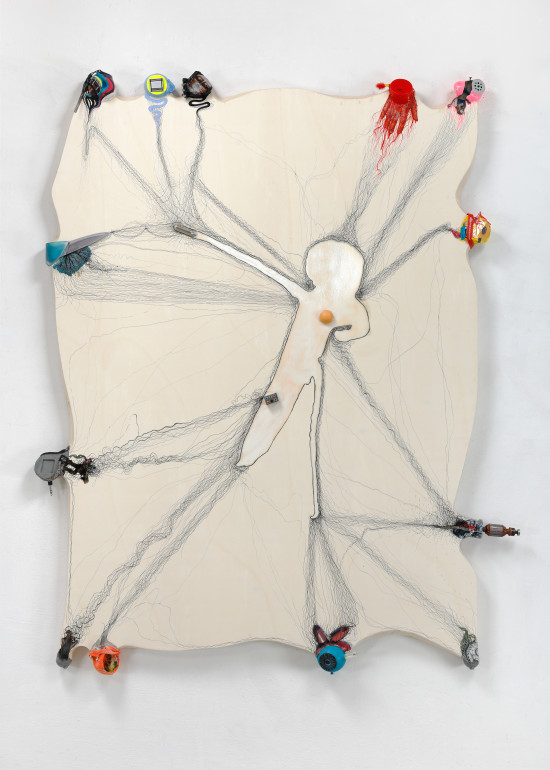
Diagrams
Each of these images consists of a free-form diagram composed of an inner, cell-like elementary shape and surrounding points. These points are interconnected, interwoven with one another and with the cell itself at the center of the image through a network of thin lines. The meaning of the image lies in how the relationships between something fundamental (namely, the cell) and the world around it are interwoven. That world is represented by assemblages and collages that form the points at the edges of the image. These visual centers very loosely express various aspects of this world, such as politics, travel, sports, the animal kingdom, and so on.
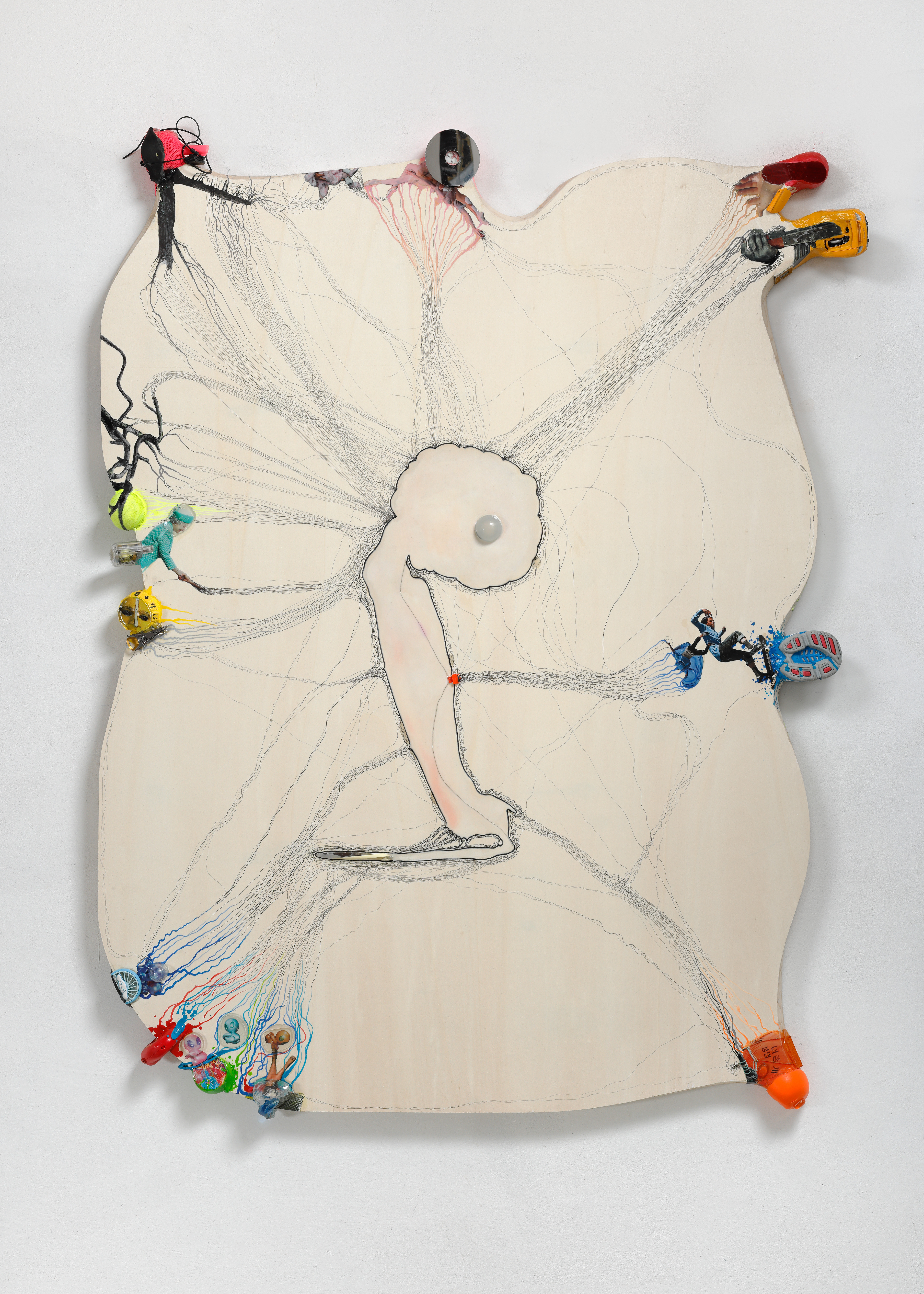
The Peony Rose Juliet, 2026, assemblages, collages, acrylic, ink, and epoxy varnish on plywood.
What the author considers important is that every cell, which has been woven from these worlds from the very beginning, does not possess merely a general, basic nature. It is always a very specific cell, one in which the code for a highly original, rare, even extravagant creature is already hidden. These creatures are 1) the Nestor Parrot, 2) the white man, and 3) the peony rose Juliet.
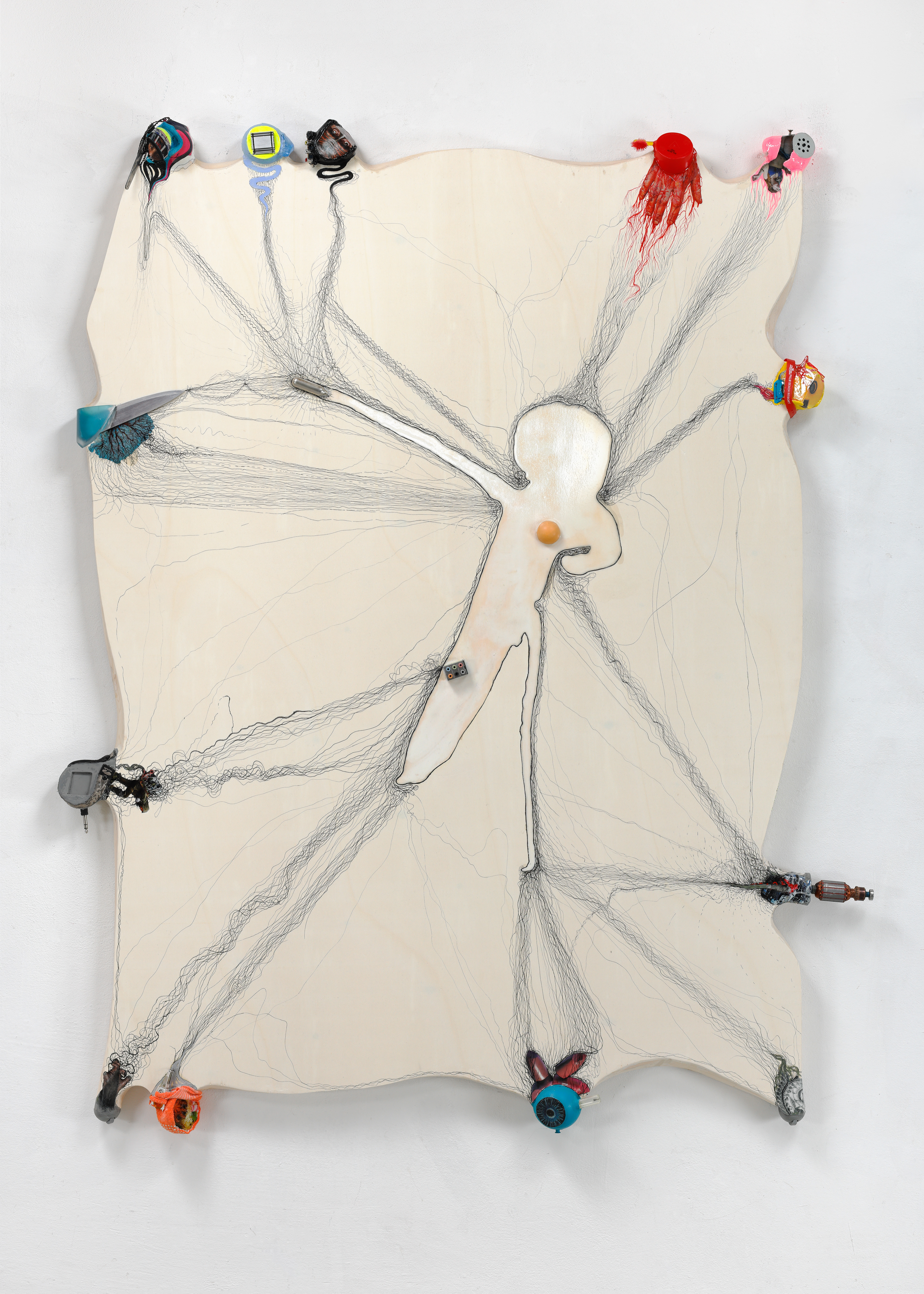
The White Man Cell, 2026, assemblages, collages, acrylic, ink, and epoxy varnish on plywood.
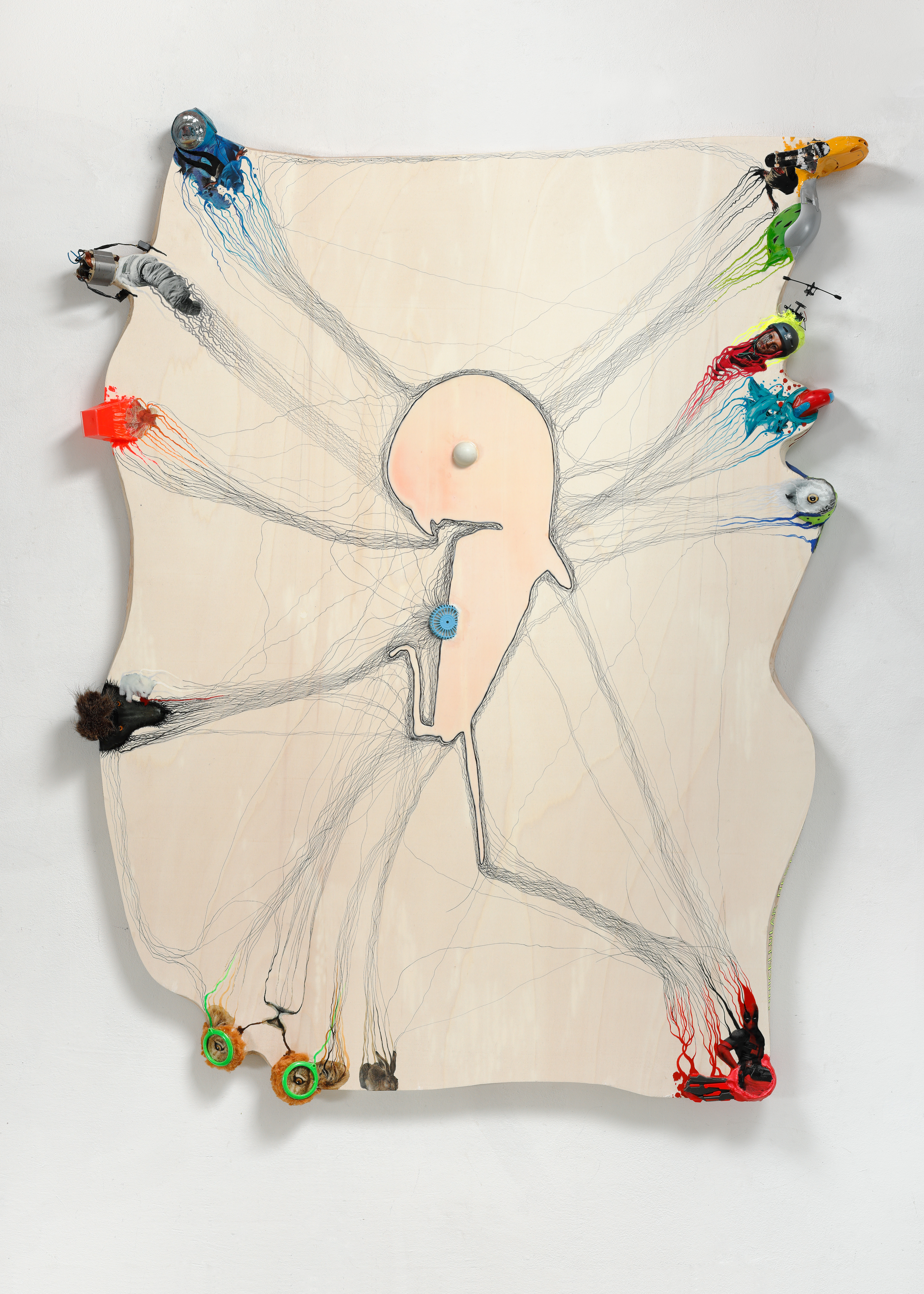
Nestor Parrot Cell, 2026, assemblages, collages, acrylic, ink, and epoxy varnish on plywood.